Original vs Pirated Software: Key Differences Explained for Smart Users
Every computer user faces a choice when getting new programs. Should you pay for legitimate software or download a free cracked version? This decision seems simple on the surface, but it carries serious consequences. Understanding original vs pirated software helps you make informed choices that protect your computer, data, and even your freedom.
Many people download pirated software without thinking about the risks. They see free programs as a money-saving opportunity. However, the hidden costs often far exceed what they would have paid for legitimate versions. In this comprehensive guide, we will explore the key differences between these two options and why choosing wisely matters so much.
What Is Original Software?
Original software refers to programs purchased legally from authorized sources. These include official websites, licensed retailers, and approved app stores. When you buy original software, you receive a genuine product with full rights to use it.
Additionally, original software comes with a license agreement. This document explains how you can legally use the program. Most licenses allow installation on one or a limited number of devices. The software company retains ownership while granting you usage rights.
Benefits of Purchasing Legitimate Programs
Buying original software provides numerous advantages that many users overlook. First, you receive the complete program without missing features or hidden problems. Developers design their products to work perfectly right out of the box.
Furthermore, original software includes customer support. When problems arise, you can contact the company for help. This support saves hours of frustration when troubleshooting technical issues. Understanding original vs pirated software differences starts with recognizing this valuable benefit.
Regular Updates and Security Patches
Software companies constantly improve their products. They fix bugs, add features, and address security vulnerabilities. Original software users receive these updates automatically or through official channels.
Moreover, security patches protect against newly discovered threats. Hackers constantly find new ways to attack systems. Without regular updates, your computer remains vulnerable to these evolving dangers.
What Is Pirated Software?
Pirated software refers to programs copied, distributed, or used without proper authorization. This includes cracked versions where protection has been removed illegally. It also covers programs shared without the developer’s permission.
People obtain pirated software through various channels. Torrent websites, file-sharing platforms, and unauthorized download sites distribute these illegal copies. Some users even share activation codes or cracked programs with friends and family.
How Software Gets Pirated
Understanding how piracy works reveals why it creates problems. Hackers modify original programs to bypass license verification. They remove or disable protection mechanisms that confirm legitimate purchases.
Additionally, some pirates copy entire programs and distribute them freely. They upload these copies to websites where anyone can download them. The original developers receive nothing while their work spreads without compensation.
Original vs Pirated Software: Security Risks
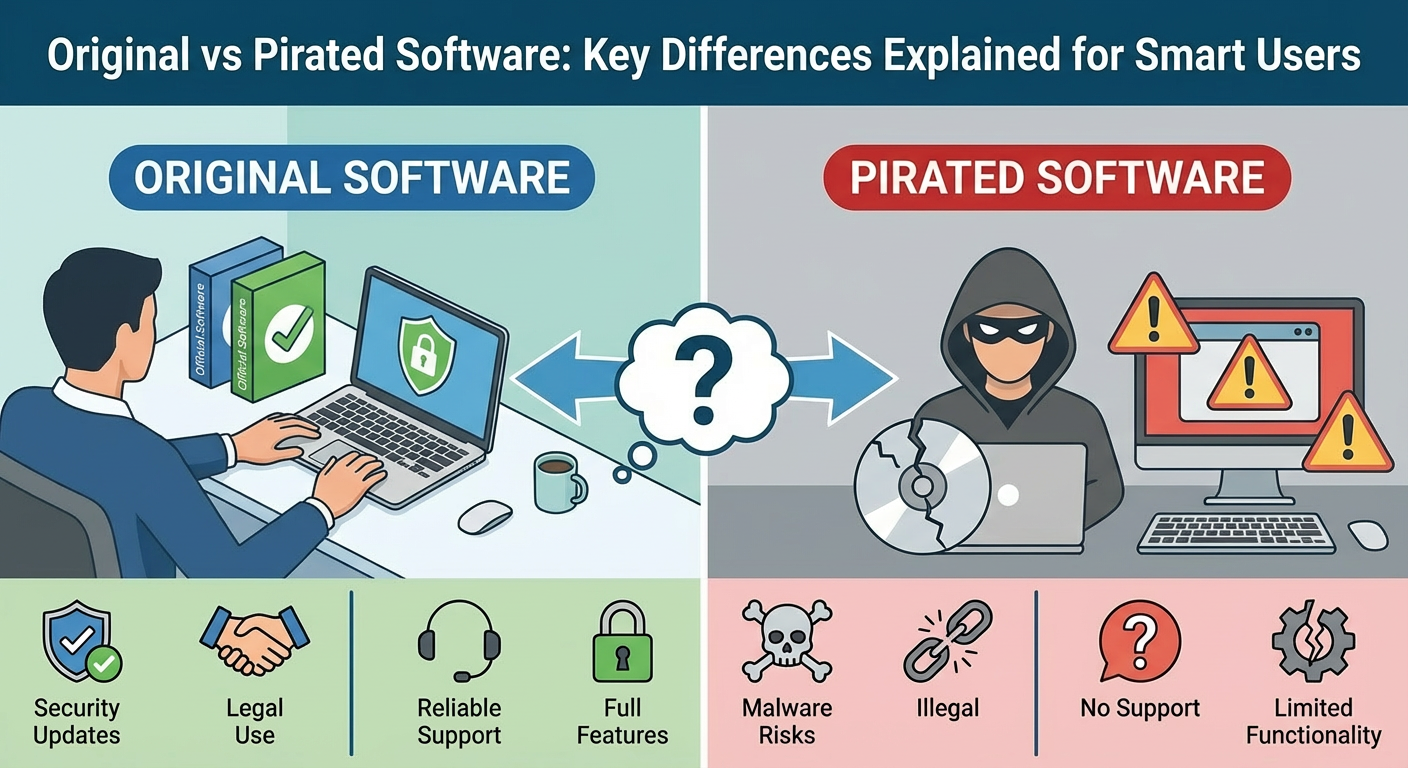
Security represents the most significant difference between legitimate and pirated programs. This difference alone should make users think twice before downloading illegal software.
Malware and Virus Threats
Pirated software often contains hidden malware. Hackers embed viruses, trojans, and spyware into cracked programs. When users install these programs, they unknowingly infect their computers.
Furthermore, this malware can steal personal information. Banking details, passwords, and private documents become accessible to criminals. Some malware even uses your computer for illegal activities without your knowledge. The original vs pirated software debate becomes clear when considering these dangers.
Ransomware Attacks
Ransomware has become increasingly common in pirated software. This malicious program encrypts your files and demands payment for their release. Victims often lose important documents, photos, and work files permanently.
Moreover, paying the ransom rarely guarantees file recovery. Criminals may take money and disappear without unlocking anything. Prevention through using original software is far better than dealing with such attacks.
Backdoor Access to Your System
Many pirated programs create backdoors in your computer. These hidden entry points allow hackers to access your system anytime. They can install additional malware, steal data, or control your computer remotely.
Consequently, your entire digital life becomes vulnerable. Even if you remove the original pirated program, backdoors may remain active. Professional help is often needed to fully secure a compromised system.
Legal Consequences of Using Pirated Software
Beyond security risks, pirated software carries serious legal implications. Many users underestimate these consequences until they face them directly.
Copyright Infringement Laws
Software piracy violates copyright laws in most countries. Using pirated programs constitutes theft of intellectual property. Developers invest time, money, and effort creating their products. Piracy denies them fair compensation for this work.
Additionally, penalties for software piracy can be severe. Fines reach thousands or even millions of dollars in some cases. Criminal charges may result in jail time for serious offenders. Understanding original vs pirated software includes recognizing these legal realities.
Business Risks and Audits
Companies face even greater risks from pirated software. Software publishers conduct audits to identify unauthorized usage. Businesses caught using illegal programs face massive fines and legal action.
Furthermore, reputation damage hurts companies long after legal issues resolve. Customers and partners lose trust in businesses that engage in piracy. This lost trust affects revenue and relationships for years.
Performance and Reliability Differences
Original and pirated software perform very differently over time. These performance gaps affect productivity and user experience significantly.
Stability and Functionality Issues
Pirated software often lacks stability that original versions provide. The cracking process can damage program code. Consequently, crashes, errors, and unexpected behavior occur frequently.
Moreover, some features may not work properly in pirated versions. Developers design complex systems where components depend on each other. When hackers modify code, they often break these connections unintentionally.
Missing Features and Limitations
Many pirated programs arrive incomplete. Hackers may remove features they cannot crack successfully. Users discover missing tools only after installation when they need them.
Additionally, cloud-connected features rarely work in pirated software. Online storage, collaboration tools, and syncing capabilities require verified licenses. The original vs pirated software comparison shows these limitations clearly.
Updates and Long-Term Support
Software evolves constantly to meet changing needs and threats. How programs receive updates creates major differences between legitimate and pirated versions.
Why Updates Matter So Much
Updates do more than add new features. They fix security holes that hackers exploit. They improve compatibility with new hardware and operating systems. They resolve bugs that affect daily use.
Furthermore, major software updates often include completely new capabilities. Users of original software gain these improvements automatically. Pirated software users miss out on years of development and enhancement.
The Problem with Updating Pirated Software
Pirated programs cannot update through official channels. License verification blocks unauthorized copies from receiving updates. Therefore, these programs become outdated quickly.
Some users seek new cracked versions when updates release. However, this process requires finding, downloading, and installing new pirated copies repeatedly. Each new download brings fresh security risks and potential malware.
Ethical Considerations in the Original vs Pirated Software Debate
Beyond practical concerns, ethical issues deserve consideration. Software piracy affects real people and companies in meaningful ways.
Impact on Developers and Companies
Software development requires significant investment. Companies hire programmers, designers, and testers. They spend years creating products that users enjoy. Piracy undermines this entire ecosystem.
Moreover, smaller developers suffer most from piracy. Large companies can absorb some losses, though it still hurts. Independent developers may abandon projects when piracy prevents profitability. Consequently, users lose access to innovative programs that never get created.
Supporting Innovation and Progress
Purchasing original software supports continued development. Your payment funds future improvements and new products. It enables companies to hire talented people and invest in research.
Additionally, legitimate purchases encourage competition and innovation. When developers see market demand, they create better products. The entire software industry benefits from users who pay fairly for programs.
Affordable Alternatives to Consider
Many users turn to piracy because software seems expensive. However, legitimate alternatives exist that cost little or nothing.
Free and Open-Source Software
Excellent free programs exist for almost every need. LibreOffice provides word processing and spreadsheets comparable to expensive alternatives. GIMP offers image editing capabilities similar to premium programs. These tools are legal, safe, and fully functional.
Furthermore, open-source software often matches or exceeds commercial products. Linux operating systems power millions of computers worldwide. VLC plays virtually any media format for free. Users have many legitimate options before considering piracy.
Subscription and Student Discounts
Software companies offer various pricing options today. Subscription models spread costs over monthly payments. Student discounts reduce prices significantly for learners. Some programs offer free versions with basic features.
Additionally, sales and promotions occur regularly throughout the year. Waiting for discounts makes expensive software more affordable. The original vs pirated software choice becomes easier when legitimate options fit your budget.
Making the Right Choice
After examining all differences, the conclusion becomes clear. Original software provides security, reliability, support, and legal protection. Pirated software offers none of these benefits while creating serious risks.
Investing in legitimate programs protects your computer and data. It supports developers who create tools you use daily. It keeps you safe from legal troubles and criminal hackers.
Therefore, choose original software whenever possible. Explore free alternatives when budgets are tight. Your digital security and peace of mind are worth the investment.
References and Further Reading: